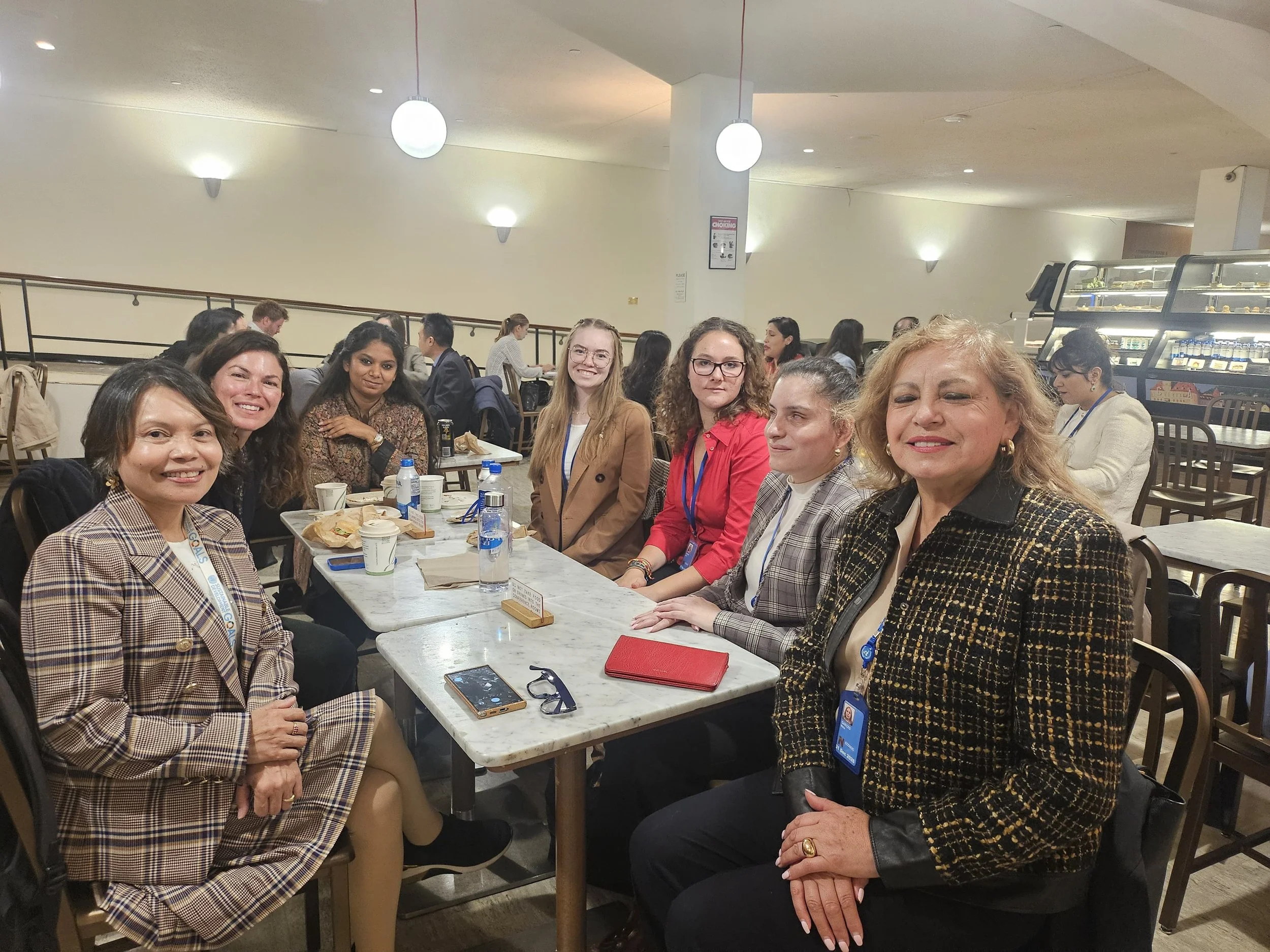
Barlaan: Convention on the Right to Development Needs Civil Society's Voice, Arduous UN Work
By Dr. Marivir Montebon
New York - UN Relations Director of the Women’s Federation for World Peace International (WFWPI) Merly Barlaan expressed optimism for the creation of an international convention on the Right to Development despite the arduous and difficult work it entails.
“The journey has been 40 years and still struggling to be adopted as a Covenant. This is the ground zero of the battlefield of North and South development. The colonized and developing countries seek their own sovereign and meaningful participation and contribution to the shaping of their countries' socio-economic development process.
Without prioritizing the benefit of the higher and greater good of humanity, I'm afraid we can't see the Covenant anytime soon. This is where the participation and voice of civil society are crucial in the process. Only with our proactive participation can we influence the outcome. The road ahead is arduous but if people understand the power of their own agency to shape the development that we want, the future is hopeful.”
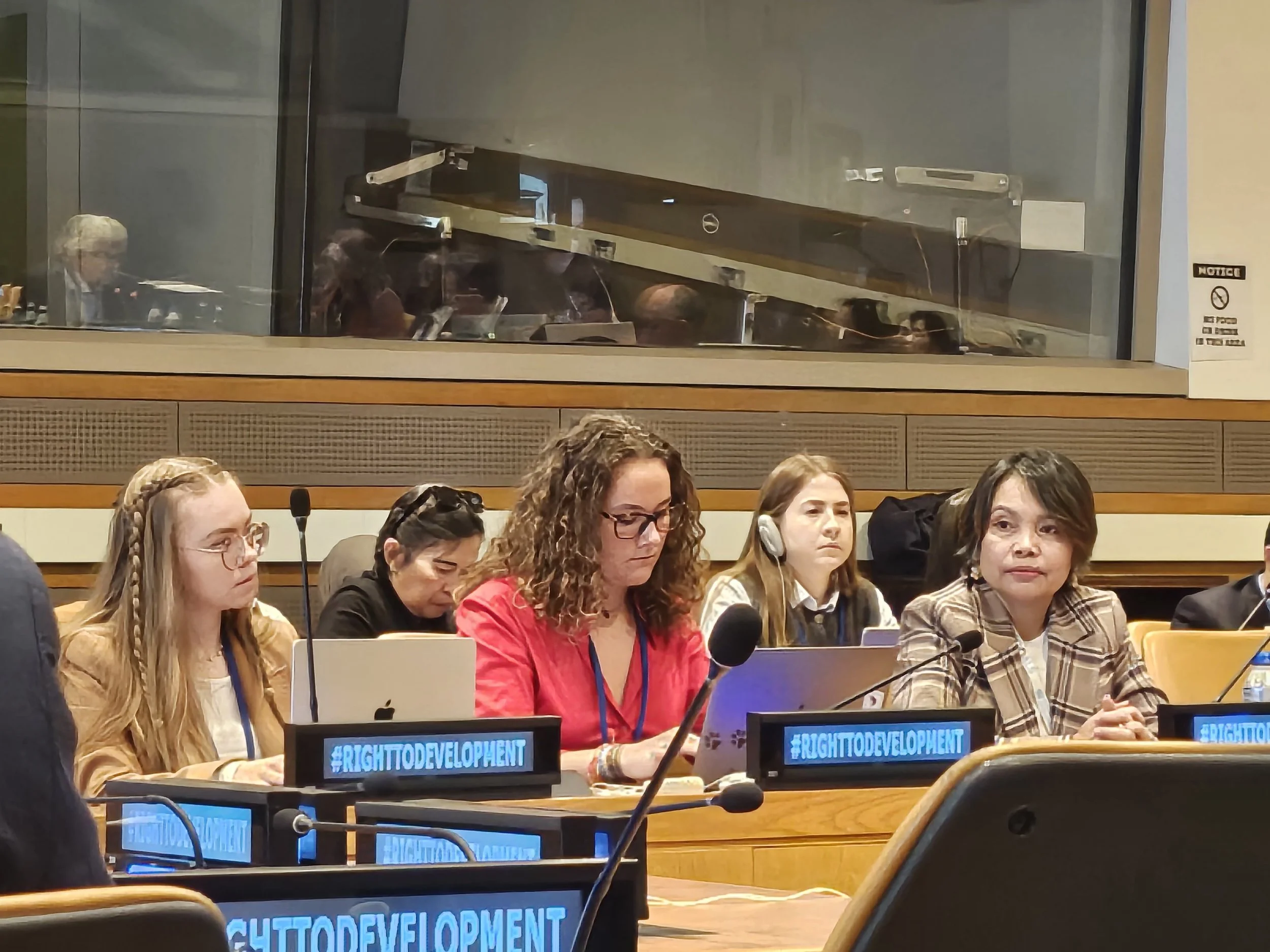
Barlaan shared her opinion at the side event of the 40th anniversary of RTD on October 29, 2026 at the UN New York Headquarters.
Special Rapporteur on the Right to Development (RTD) Surya Deva described the declaration under the UN Commission on Human Rights as having its “mid-life crisis” now that it is 40 years old and has failed to get a substantial commitment from member states for it to become a binding international convention.
Deva was among the panelists at the side event. The Permanent Mission of China, the Coordinating Bureau of Non-aligned Movement, and the Office of the High Commissioner on Human Rights organized the event that brought together member states, UN colleagues and human rights experts for a discussion on advancing the right to development in practice.
Without mincing words, Deva emphasized that member states and the private sector must move from investing in wars towards peace and climate resilience.
“We have the money for war economies, such as the US. But we need to invest in collective security, on peace that brings dignity,” he suggested.
Deva added that what makes RTD unique is that it eliminates occupation and aggression. “It requires international cooperation. It is difficult but there is no substitute to it,” he said.
Panelist Mahinour Al Badwari, Global Partnerships Lead of the Center for Economic and Social Rights, remarked that the RTD is the convention that would address structural injustices such as aggression, inequitable debt system, and taxations.
Al Badwari said that an RTD convention is the tool to address structural and historical inequities.
In 1986, the General Assembly adopted the landmark RTD Declaration. The Vienna Declaration and Programme of Action reaffirmed it as a universal and inalienable right and an integral part of fundamental human rights.
For 40 years, the RTD failed to gather a two-thirds majority of the member states for it to become a formal convention at the UN. Foremost of the challenges is political resistance by some countries based on their national interests.
There is also RTD’s complexity of implementation as it encompasses economic, social, and cultural rights, making it difficult to create a universally accepted framework that can be implemented across diverse nations.
Subsequently, resource allocation has been meager for RTD’s progression due to the member states’ lack of commitment.
Zamir Akram, chair and rapporteur of the Intergovernmental Working Group on RTD, said that the RTD Covenant is a measure of multilateralism. He said that regional mechanisms may lead towards a legally binding covenant.
Existing declarations on the right to development and peace have emerged in Asia, Africa, and the Middle East because of regional cooperation.
Meanwhile, the UN has strengthened relevant mechanisms, including the Intergovernmental Working Group, the Special Rapporteur and the Expert Mechanism on the Right to Development, while continuing intergovernmental discussions on the draft International Covenant on the Right to Development.