
WFWPI President Moriko Hori Receives Peace Awards from Pathways to Peace
I'm proud that our work does not treat women only as victims or beneficiaries. We recognize them as leaders, partners, and agents of peace. - Moriko Hori
New York – WFWPI President Moriko Hori was recently given the Exceptional Women of Peace Award by the Pathways to Peace (PTP), a global nonprofit organization founded dedicated to expanding the understanding and building of peace globally.
Hori was one of the eight finalists of the EWOP for 2026 and will be honored in a ceremony on October 31, 2026. The other finalists were Patricia Elias of Lebanon; Aya Chebbi of Tunisia; Mariam Amari of Afghanistan; Bushraa Alsaadi of Southern Yemen; Rita Marie Johnson of Costa Rica; Justine Kerubo Motachi of Kenya; and Nina Koevoets of Greece.
PTP was founded in 1978 and is a UN-designated Peace Messenger Organization. It has a Consultative Status with the United Nations Economic and Social Council (ECOSOC) and the Department of Global Communications (GDC).
PTP executive director Tezikiah Gabriel featured Hori in a conversation where she shared her peace-building work.
Excerpts of the interview:
Tezikiah Gabriel: Congratulations, Moriko. Thank you for being an exceptional Woman of Peace finalist. We honor your work. It's just amazing. And we really can't wait to hear more.
Moriko Hori: Thank you so much for choosing me. This is my great honor. My name is Moriko Hori. I'm Japanese. I live in Tokyo, Japan. And I serve as the international president of the Women's Federation for World Peace International and as the president of Women's Federation Japan.
Although I'm Japanese, I spent part of my childhood in South Korea during the period of military rule. Maybe I don't know whether you know about the tension between Japan and Korea. These two countries share a painful history. Japan occupied Korea for 40 years. And because of that history, growing up in Korea was a very hard time for me.
The relationship of these two countries led me to think deeply about identity and historical wounds, reconciliation, and peace.
From an early age, I learned that peace is not an abstract ideal. It is a human necessity that must be built through understanding, maybe forgiveness, and relationships.
That experience shaped the direction of my life and continues to guide my work today. So that's the basic information about myself. Thank you.
TG: Where do you do your work?
MH: My headquarters is in New York, but since I live in Tokyo, I do online meetings, but I travel around many different countries. We have 128 chapters. I have many schools and medical clinics. I visit all the actual sites and oversee the projects. I lead this organization to serve the people.
TG: Wonderful. Tell us a little bit more about your work and the difference it makes. If you have a story you could share about that difference that would be wonderful.
MH: My work is to empower women to become leaders and peacemakers in their families and communities. The Women's Federation works through education, leadership development, humanitarian assistance, vocational training and also family strengthening programs.
We also hold dialogues among young women from different cultures and backgrounds. The difference we seek is not only to improve someone's immediate circumstances. We help women recognize their dignity, develop their abilities and also eventually become people who support and empower others.
Yesterday, I came back from India. I was in West Bengal where I met women who had survived human trafficking and they had experienced exploitation and deep trauma but some of them are now working as social workers to protect other women and girls in their communities.
I also met refugee women and girls in New Delhi, the capital city, and many had been forced to leave their homeland and had lost opportunities to pursue their dreams. Yet they spoke about becoming doctors, political leaders and people who could help the poor.
These women reminded me that suffering does not have to be the end of a person's story.
I think that through education, encouragement, and a supportive community, pain can be transformed into purpose.
This is the difference I hope my work makes - helping women move from vulnerability to leadership and from receiving hope to becoming a source of hope for others. I hope I answered the question.
TG: Yes, you did. That was beautiful. Thank you. And you talked a little bit about how you define peace and you also talked about the source of your dedication to peace building when you were a young girl. Can you tell us a little bit more about how you define peace and the source of your dedication?
MH: Thank you. For me peace is not simply the absence of war or conflict. Peace is the presence of dignity, hope, justice and relationship in which people feel valued and respected.
And I think political agreements are also important but they're not enough. Lasting peace also requires healing with people, families and communities. Unhealed pain can be passed from one generation to the next. But healing, which may be compassion and reconciliation, can be passed forward.
I think so. My dedication to peace comes partially partly from my childhood experience between Japan and Korea. I became aware that historical wounds do not disappear simply because time passes. But people must make a conscious effort to understand one another and build new relationships.
I have also learned through my work that women often play a unique role as healers, educators, peace builders and protectors of life. That is why I believe there can be no lasting peace without women.
TG: Wonderful. And in your work for peace, which is extensive, what are you most proud of?
MH: I'm proud that the Women's Federation has grown into a global network connecting women across national, racial, religious, and cultural boundaries. However, I'm most proud when I see a woman who once needed support become a leader who supports others.
I've seen survivors become mentors, you know, refugees become advocates and graduates of our vocational school return to help young generations.
For example, in Rwanda, we established a vocational school to support young people affected by the Rwandan genocide and many who graduated later choose to help other young people in their communities.
To me, this is the most meaningful result of peace building.
It is not simply completing a project or helping one individual. It is creating a continuing cycle in which one person's transformation becomes the hope of many others.
I'm proud that our work does not treat women only as victims or beneficiaries. We recognize them as leaders, partners, and agents of peace.
TG: That's beautiful. Thank you. We've learned a bit more about you. What would you want others to know about you and your work for peace?
MH: Yes, thank you. I would like people to know that peace is closer to us than often imagined. Sometimes, we think that peace is created only by governments, diplomats, or international institutions. Their work is essential, but peace also begins in everyday life.
I believe it begins when a mother listens to her child with patience. When a woman reaches across a culture or religious divide. When a survivor helps another survivor. And when someone chooses reconciliation instead of resentments.
These actions may not make it to international headlines, but they change families, communities and future generations. My mission is not simply to help women. It is to help women discover their own power to become peacemakers who help others.
I believe that when women are empowered to lead with courage, passion, and wisdom, they can heal divisions, strengthen families, and transform communities. That's my message.
TG: What a beautiful message it is and one that we share as well with you and stand with you around. I love all your messages about hope and clearly the work you're doing makes a huge difference. So, thank you. Thank you. We're so grateful that you are a finalist for the exceptional women of peace program. Thank you.
MH: Thank you.
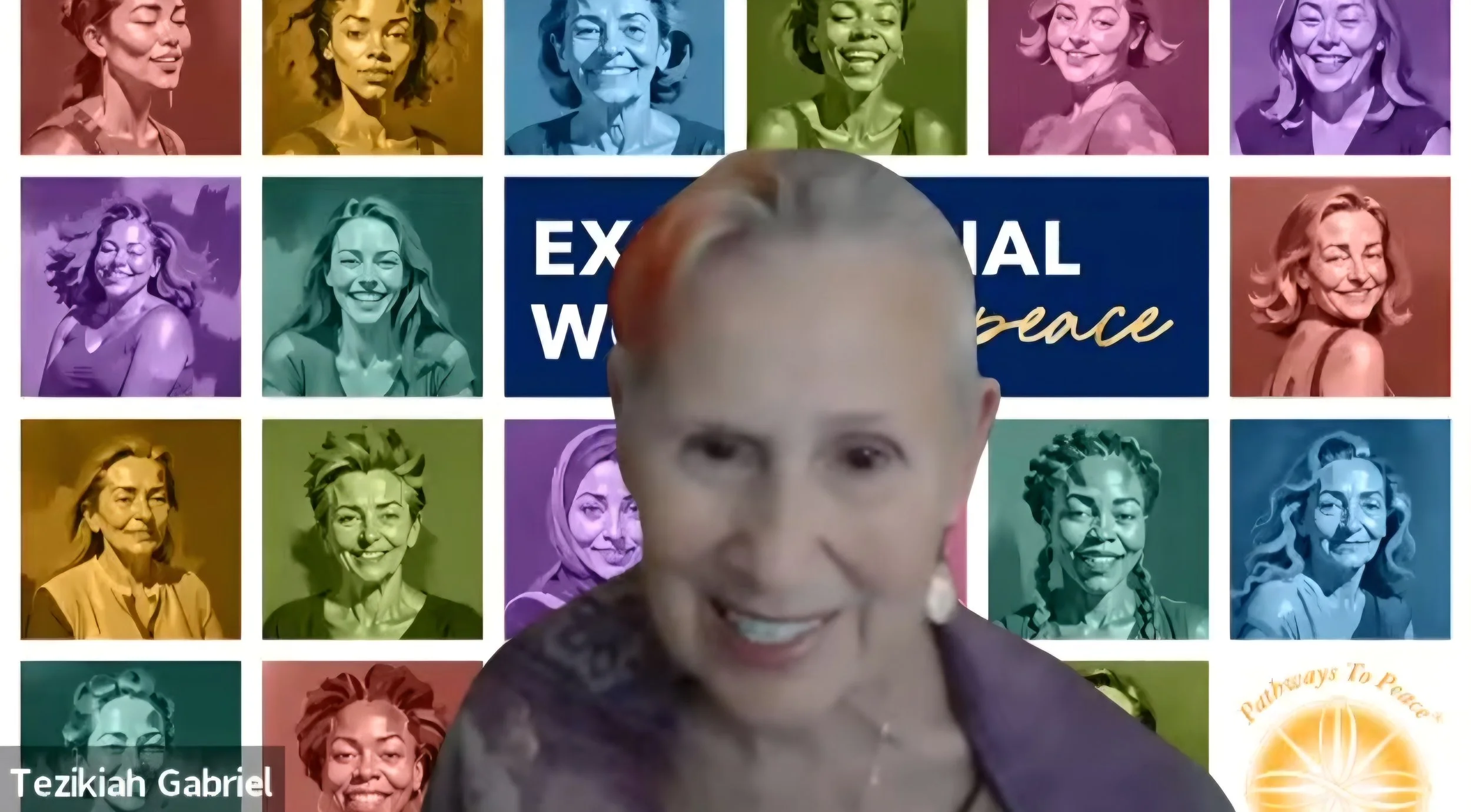
PTP executive director Tezekiah Gabriel
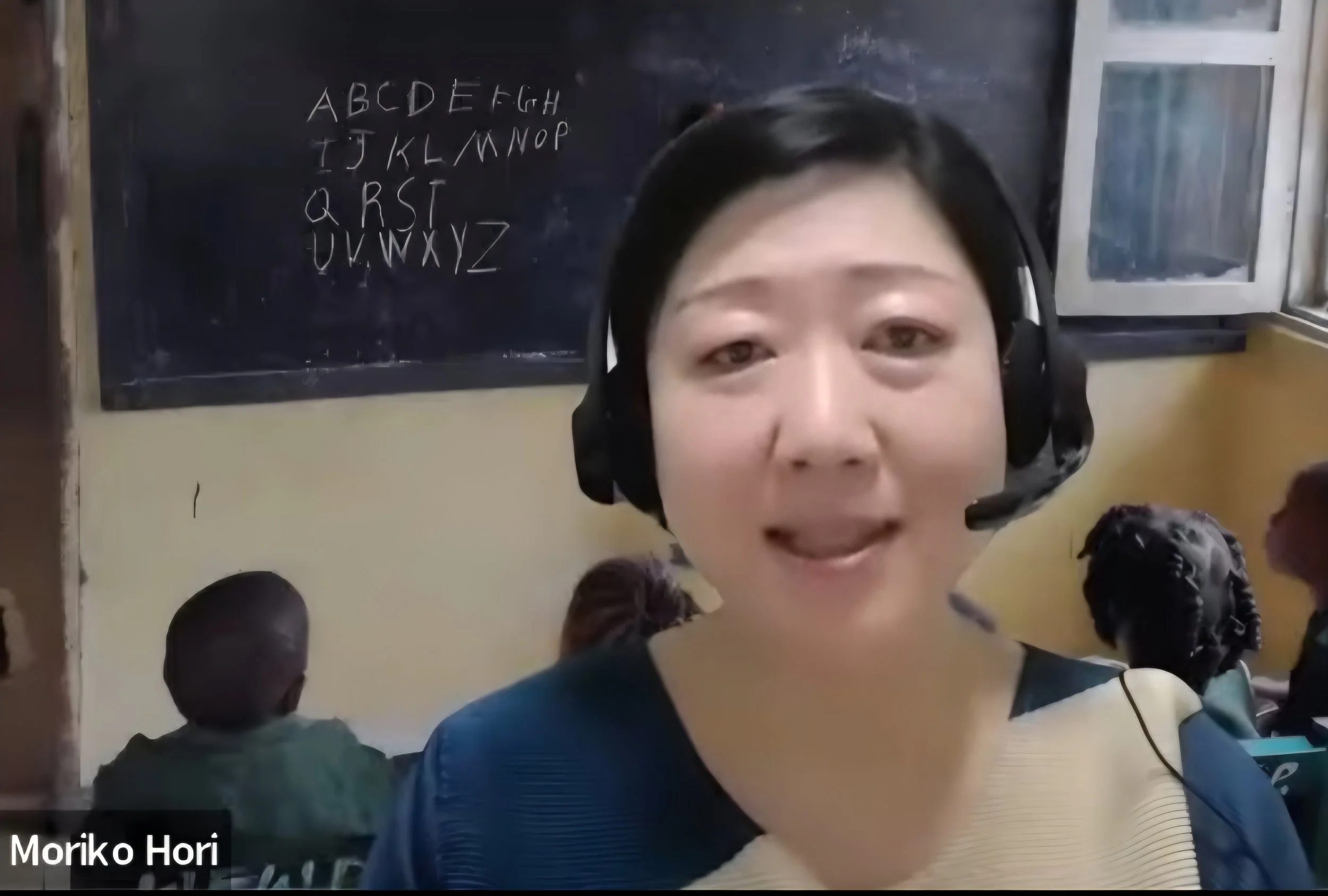
Hori: This is the difference I hope my work makes - helping women move from vulnerability to leadership and from receiving hope to becoming a source of hope for others.