
WFWPI Annual Gathering 2026 Celebrates “The Power of We”, Harnesses AI for Productivity
At the WFWPI Annual Gathering 2026, women leaders tackled the need for and challenges of using Artificial Intelligence to increase organizational productivity.
Led by AI systems expert and entrepreneur Rumana Khan, the education session provided a practical demonstration of how artificial intelligence can support the daily work of NGOs. Khan showed how AI can help organizations organize raw information, develop measurable indicators, align projects with the United Nations Sustainable Development Goals (SDGs), populate reporting templates and prepare materials for grant applications. These tools can be especially valuable for local chapters working with limited staff, time and financial resources.
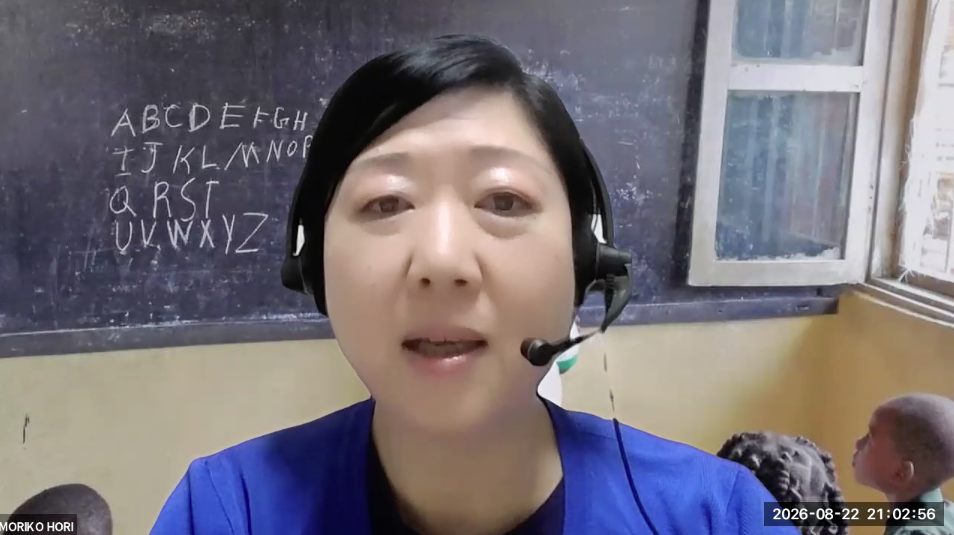
WFWP President Moriko Hori: The power of we means asking how we can lead together.
The session emphasized that credible reporting should clearly communicate what an organization did, whom it reached, what changed, which SDG targets were supported and what evidence demonstrates that change. By strengthening this process, WFWP chapters can more effectively document their achievements and communicate their impact to partners, donors and the wider international community.
Khan reminded participants to use AI responsibly. Sensitive or confidential information, particularly data concerning vulnerable women and children, must be protected. AI-generated information should always be reviewed for accuracy and guided by clear ethical boundaries. The key message was that AI should serve as an assistant, not replace human judgment, compassion or responsibility.
The online annual gathering on August 22 brought together leaders, members, partners, and friends from around the world. Under the theme, “The Power of We: Learning, Leading, and Growing Together,” participants joined across regions and time zones to exchange experiences, strengthen connections and transform shared values into practical action.
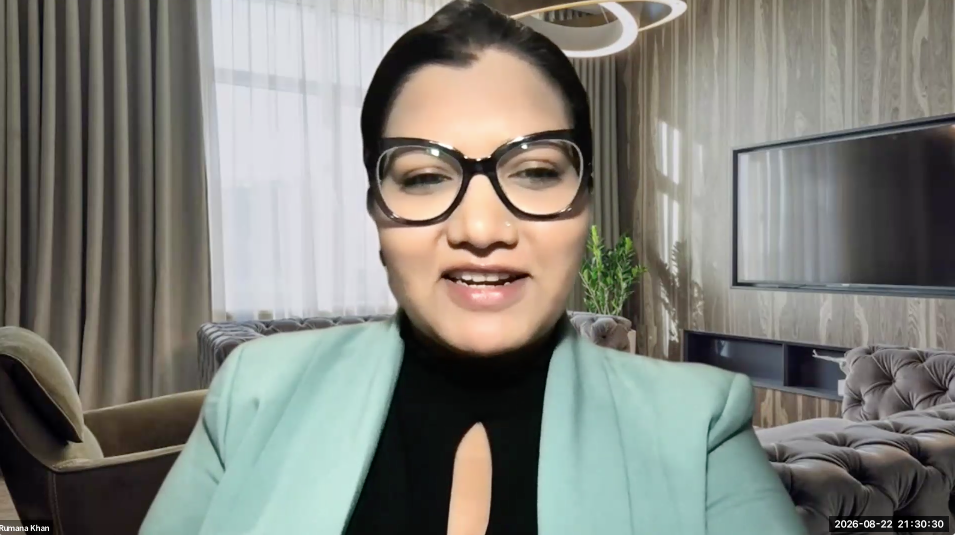
Rumana Khan: AI should be used responsibly.
In her opening remarks, WFWPI President Moriko Hori reflected on the serious and interconnected challenges facing the world, including conflict, displacement, poverty, climate change, loneliness and rapid technological development. She stressed that no individual or organization can solve these challenges alone and called for greater collaboration across generations, cultures, religions and sectors.
Hori said that a human-centered approach to leadership is rooted in empathy, care, cooperation, inclusion, intuition and relationship-building. She described leadership as standing with people and creating the conditions in which everyone can contribute and grow.
“Strength is not only the power to command; it is also the courage to listen,” she shared. “This leadership does not ask only, ‘How can I lead others?’ It also asks, ‘How can we lead together?"
Hori highlighted the importance of healthy family communication as a foundation for peace. The ability to recognize emotions, listen without judgment, express feelings constructively and transform conflict into dialogue can help prevent isolation, violence and youth crime while developing empathy, respect and responsibility.
Hori further called on WFWP chapters to create meaningful opportunities for young women. She emphasized that young women are not only the leaders of tomorrow but partners in leadership today who should be trusted with responsibility and invited to help shape WFWP’s future.
The program was moderated by Gloria Miranda Dantas, Sub-regional Director of WFWP Latin America.
During the interactive “One Talent, One Solution” breakout session, participants discussed five common challenges faced by WFWP chapters: Attracting and involving younger women; Finding partners and supporters; Improving reporting and communication; Creating impactful projects with limited resources; and Motivating members and preventing burnout.
Participants recommended making genuine space for young women to express their ideas and talents, giving them responsibilities, and allowing trust to grow without micromanagement.
In the “Voices of Impact” session, Jahyeon Manabat, Chairwoman of WFWP Gwangyang in the Republic of Korea, shared how WFWP shaped her personal journey and commitment to peace.
Drawing on her Brazilian, Filipino, Japanese and Korean family connections, she described multiculturalism as a bridge rather than a barrier. Through community cleanups, English education and activities involving families, she has helped people of different ages and backgrounds build confidence, friendship and belonging. For Manabat, impact is not measured only through numbers, but through confidence restored, friendships created, families given hope and people inspired to serve. Her testimony affirmed that peace can begin with one woman, one family and one community at a time.
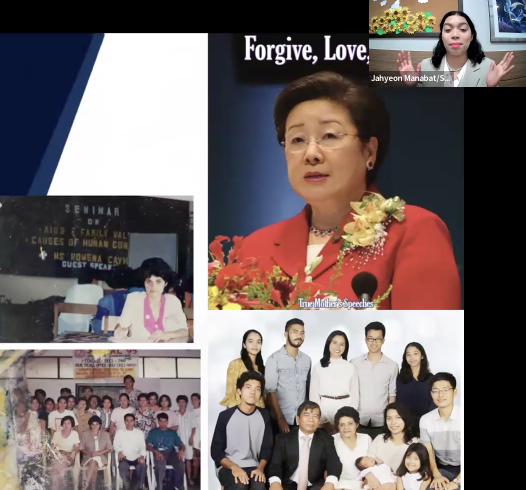
Jayheon Manabat: Impact is not measured only through numbers, but through confidence restored, friendships created, families given hope and people inspired to serve.
She also explained how AI-assisted translation has helped her chapter communicate in Korean, English and Japanese, making information more accessible to multicultural communities and increasing participation in humanitarian initiatives. Her testimony affirmed that peace can begin with one woman, one family and one community at a time.
Representing North America, Regional President Dr. Katarina Connery spoke about leadership transitions in Canada and the United States. She identified connection and collaboration as key priorities, particularly during periods of organizational change.
Canada plans to strengthen relationships across diverse cultural, spiritual and religious communities and reconnect its network through an upcoming 35th-anniversary celebration. In the United States, regular leadership meetings are being redesigned as an “Empower Hour,” combining leadership education, discussion and mutual support.
Representing Latin America and the Caribbean, Roswitha Dueck de Giuliano highlighted a series of continental forums organized with the Global Women’s Peace Network. Hosted by different countries and subregions, the forums addressed human dignity, purposeful leadership, inner peace, family values, good governance and environmental responsibility.
The initiative strengthened cooperation among countries, increased the visibility of national chapters and women peace leaders, and created a continuous regional rhythm of education and partnership. More than a series of online events, it developed into a living network of women committed to cultivating peace in their families, communities and nations.
The Annual Gathering strengthened WFWPI’s contribution as an NGO engaged with the United Nations by building the practical capacity of its global network to connect grassroots action with international priorities.
Improved SDG-aligned planning, monitoring and reporting will help chapters demonstrate not only how many people participated in a program, but what meaningful change took place. This evidence can strengthen WFWPI’s contributions to UN discussions, reports and partnerships while ensuring that the experiences of women and families at the community level are reflected in global dialogue.
The gathering also advanced several priorities closely connected to the UN agenda: women’s leadership and participation, intergenerational inclusion, responsible use of technology, strong families and communities, cross-sector partnership, environmental responsibility and a culture of peace.
By connecting global frameworks with local experience, WFWPI can serve as an important bridge, bringing international goals closer to communities while bringing the voices and solutions of grassroots women into international spaces.
The participants were invited to identify one small, specific and realistic action they would take following the gathering. Commitments included beginning to use AI, practicing AI-supported reporting and developing the knowledge needed to fulfill leadership responsibilities more effectively.
The event concluded with a reminder that the power of “we” does not require everyone to be identical. It calls people to bring their different gifts, cultures and experiences into one shared purpose.
The WFWPI Annual Gathering 2026 strengthened global unity, expanded organizational capacity and equipped participants with practical tools for their work. It reaffirmed that peace is not something to be passively awaited. It is something people learn, lead, grow and build together.
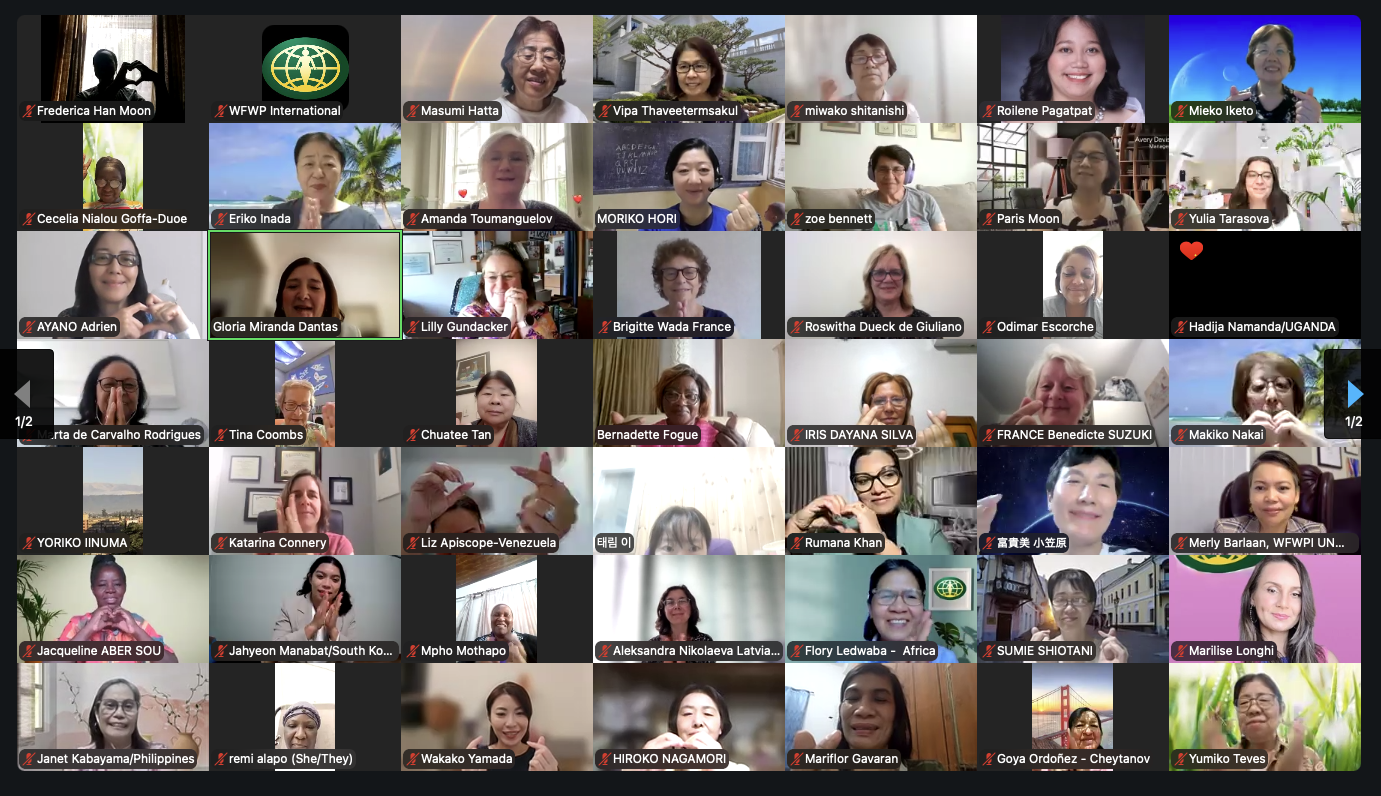
Some participants of the 2026 Annual Meeting of WFWPI.