
On AI and Human Development: How Do We Ensure That Humans Are Not Left Behind?
By Ambassador Mario Lopez de Leon Jr (Ret)
Senior Adviser on Diplomacy and UN Representative, WFWPI
The UNGA 81 Special Session on AI and Human Development highlighted an important shift in the global conversation on artificial intelligence: from asking primarily what AI can do to examining what AI is doing to people, societies and human development.
The central message was that technological advancement and human advancement are not automatically the same.
AI can improve education, healthcare, agriculture, accessibility, scientific research and public services, but these gains should ultimately be assessed by whether they strengthen human dignity, agency, responsibility, creativity and inclusion.
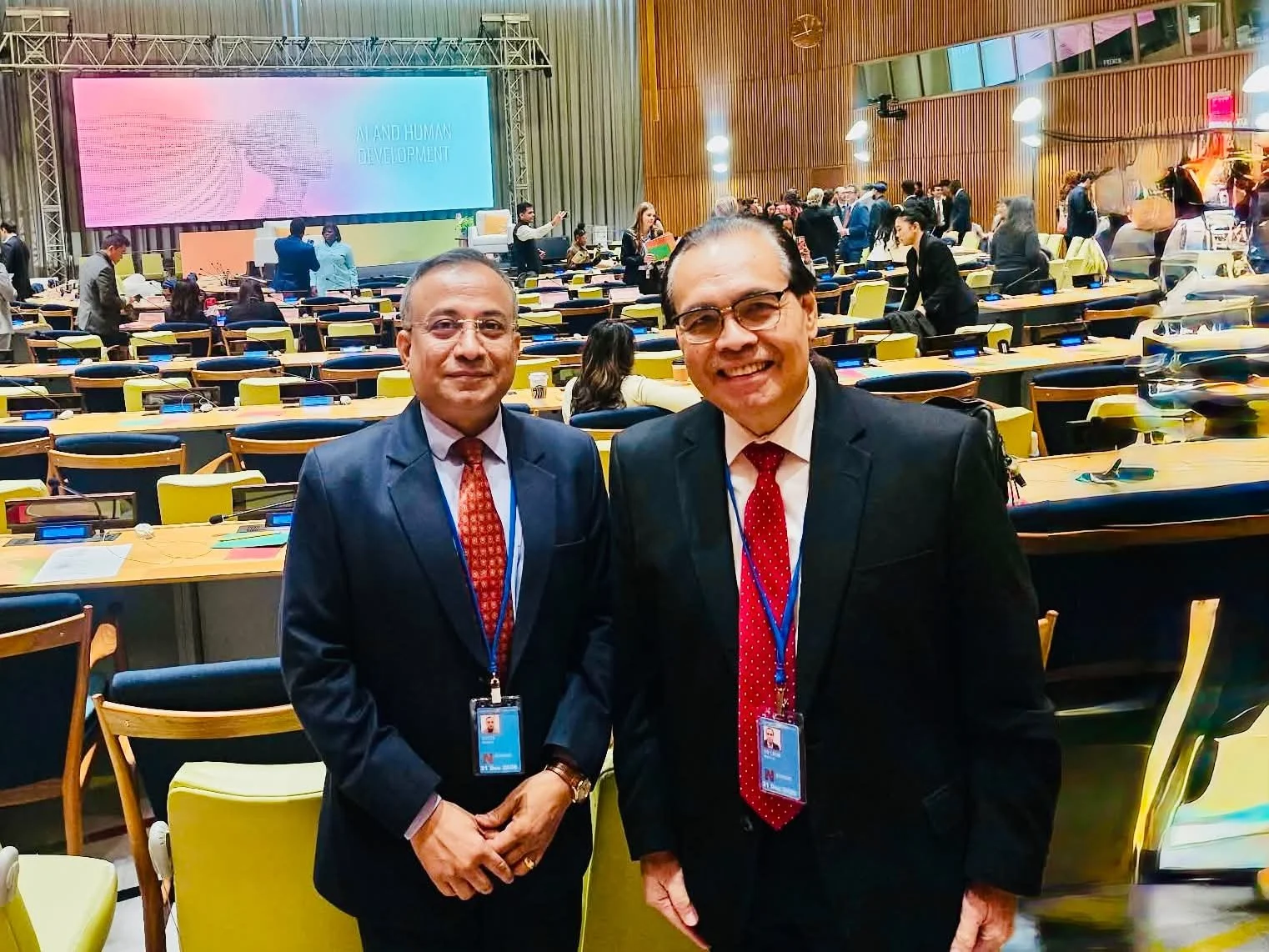
Ambassador Mario de Leon (right) and Anupam Dutta.
A recurring theme was human agency. AI should augment human capability rather than replace the processes through which people learn, think, decide, create and relate to others. As AI systems become increasingly autonomous, human accountability becomes even more important. Responsibility for consequential decisions must remain with identifiable people and institutions, not with machines.
This principle was reinforced by references during the session to Pope Leo XIV’s encyclical “Magnifica Humanitas” and his recent reflections on AI and human centrality: technology should remain in service of the human person rather than reshaping society around the requirements of technology.
Education emerged as a particularly important area. AI can generate answers, essays and solutions, but this does not necessarily mean that learners are developing understanding or judgment. In the AI era, education must therefore place greater emphasis on critical thinking, systems thinking, interpretation, verification and ethical judgment.
The objective should not simply be better outputs, but outcomes that strengthen human capabilities. Hence the suggestion to rename AI to “augmented intelligence.”
The discussion also stressed that AI should not substitute for human relationships and creativity. Families, teachers, peers and communities play essential roles in developing empathy, identity, responsibility and social understanding. Likewise, the value of creativity lies not only in producing art or content, but in the human process of imagination, discipline and meaning-making.
For the Global South, the discussion moved beyond conventional digital inclusion.
Connectivity remains necessary, but true participation in the AI era also requires local-language representation, relevant training data, skills, computing capacity, institutional capability, and data sovereignty.
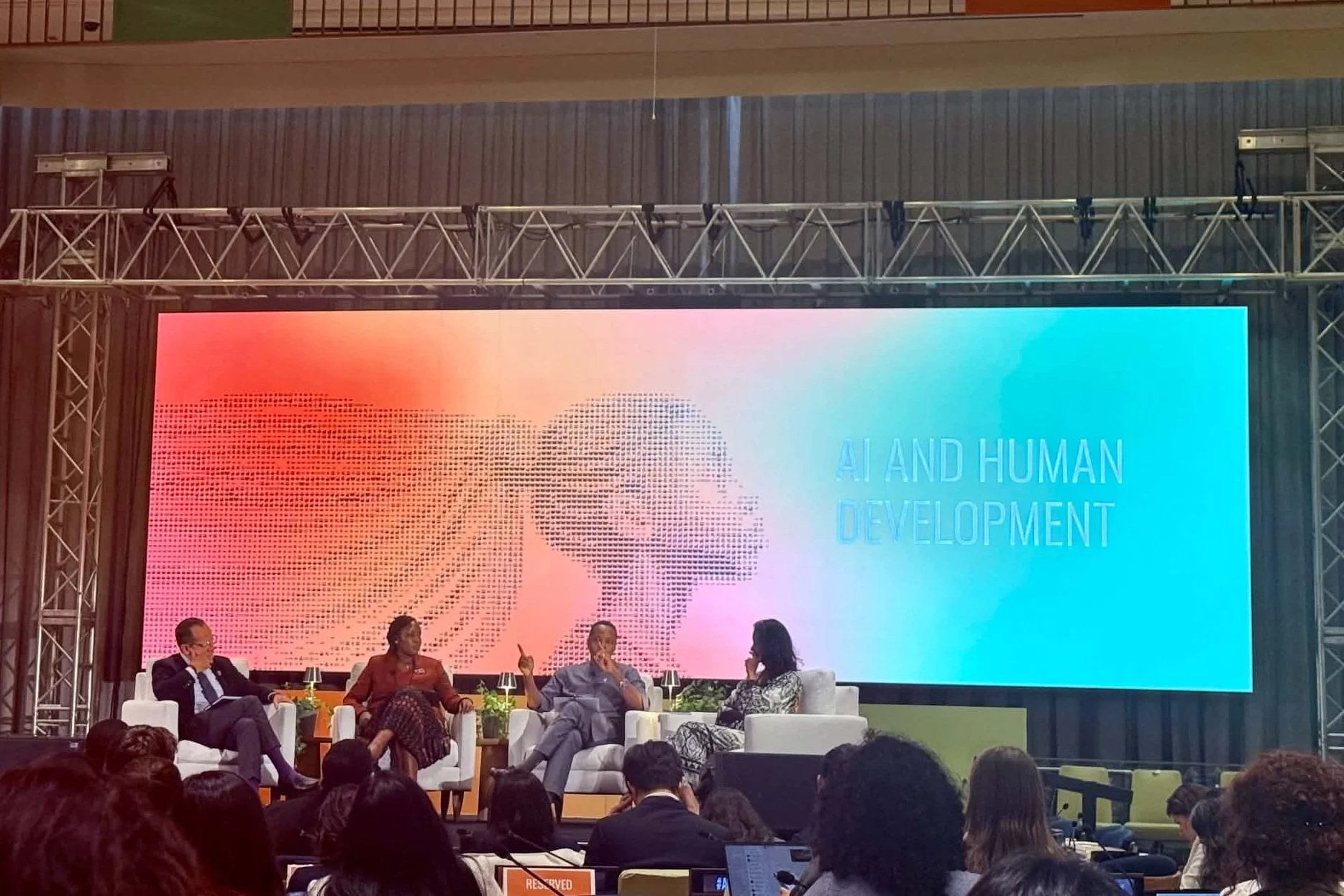
Representatives from the Global South - Mexico, Rwanda and Sierra Leone - discuss how they are handling AI.
This distinction between AI inclusion and AI agency is particularly important for women and marginalized communities. Developing societies should not simply consume AI systems designed elsewhere; they should have the capacity to shape how AI is developed and applied.
The broader international dialogue—following related discussions in Cairo, Mexico City, Xi’an and Rome before New York—underscores that the future of AI cannot be defined exclusively by technology companies or advanced economies.
Different cultures, societies, faith traditions and developing countries must participate in defining what constitutes human progress in the AI era. The latter reinforces the need for AI governance and development frameworks that are globally inclusive, culturally responsive and grounded in shared human values.
The SDGs provide a useful framework for measuring AI’s contribution to development.
AI should be viewed as a potential SDG accelerator, but deployment alone is not success. The more meaningful test is whether AI expands people’s capabilities, reduces exclusion, strengthens human agency and enables broader participation in development.
For WFWPI, the session offers a clear basis for engagement. Its work on women, families, peace, education and sustainable development can help ensure that AI remains human-centered. WFWPI can emphasize digital and AI literacy, women’s participation in AI governance, protection of human relationships, especially in families, culturally inclusive technologies, and measurable use of AI to accelerate the SDGs.
Three Key Takeaways
1. From capability to humanity: The question is shifting from what AI can do to what AI is doing to us.
2. From access to agency: AI should strengthen people’s ability to think, decide, create, and participate independently. AI should augment human potential, not replace the human values that make progress meaningful.
3. From technological progress to human progress: AI should ultimately be judged by whether it advances human dignity, responsibility, inclusion and sustainable development. AI should improve processes, increase productivity, reduce complexity, and create new opportunities while keeping people at the center.
The core question is simple: As machines become more capable, how do we ensure that human beings become more capable as well?
(With a report from Anupam Dutta, WFWPI UN Representative and Headway BPO Founder)
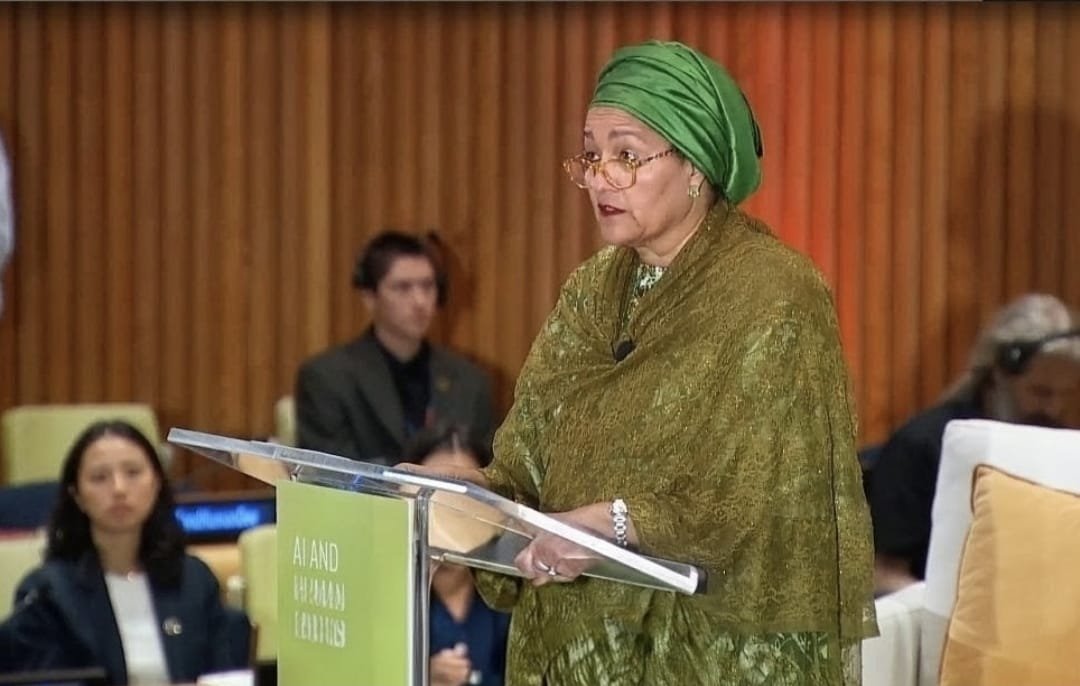
Deputy Secretary General of the UN Aminah Mohammed, host of the special session. Photo Credit: UN Web TV