
Govt, sustainability leaders from US, Philippines, Mexico say SDGs must be people-centered, collaborative to succeed
By Dr. Marivir Montebon
New York – Speakers from the Philippines, US, and Mexico at the WFWPI-organized international parallel event of the UN High Level Political Forum on Sustainable Development agreed that the test of sustainability is how it has improved the lives of people. They share the same strategy of community-buy-in and collaboration on the ground.
Guest speaker Dr. Maria del Carmen Santiago, Commissioner for the Environment in the township of Franklin in New Jersey noted that public participation in crafting and implementing local policies create the most impact in Franklin's conservation of plastics and reducing gas emissions.
"Sustainable development is not an abstract goal but a shared responsibility - one community, one policy, one partnership at a time with municipal resolutions and ordinances," remarked del Carmen during the online event on July 16, 2026.
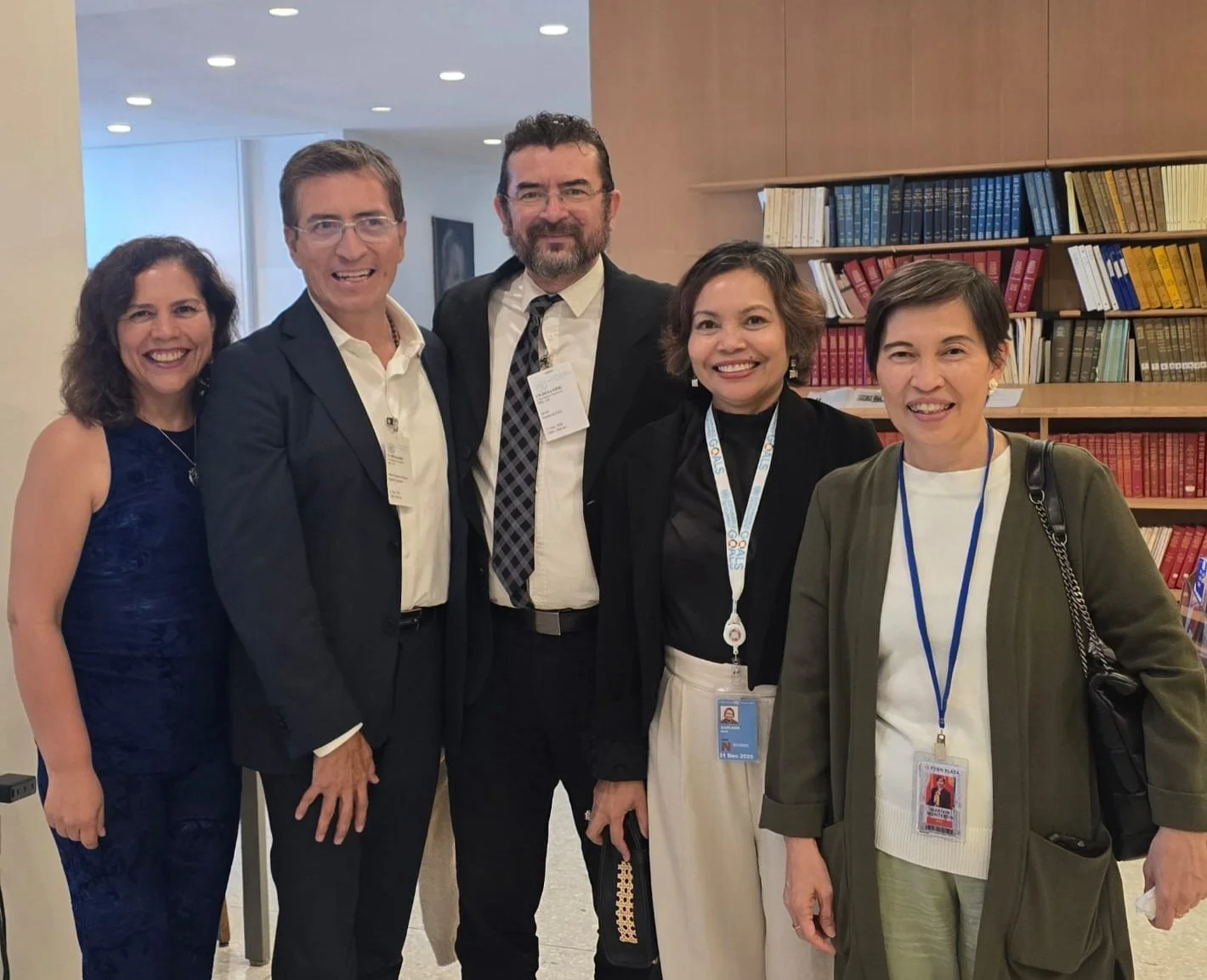
WFWPI VP and UN Relations Offices director Merly Barlaan with Voluntary Local Review Laboratory presenters from Mexico Dr. Javier Sandoval (2nd from right) and Paulo Aguilar Gonzalez (2nd from left) and wife Luz of the CJUR International Association of Urban Legislation, and UN WFWPI representative Marivir Montebon.
Amb. Mario de Leon Jr., WFWPI senior consultant for diplomacy, noted that member states who attended the Ministerial Meeting for the HLPF acknowledged that local implementation is the determinant of the successful SDGs.
"Tangible improvements experienced by people on the ground are the true test of delivery of services and programs by governments who pledge commitment to SDGs," he said.
The challenges met by member states is foremost continued geopolitical instability that has threatened the gains of SDGs worldwide, as well as the emergence of AI that could be used to undermine realities, said de Leon.
Better data as a guide to creating appropriate measures has also been cited at the Ministerial Meeting.
De Leon noted that innovative financing is indispensable in implementing SDGs. Non-conventional funding for sustainability include blended finance, local resource mobilization, digital financial innovation, private-public partnerships, and sustainable and green finance.
The WFWPI parallel event came at a crucial time when the 17 Sustainable Development Goals are ending in 2030. Member states and non-governmental organizations are in the process of evaluating the impact of their local courses of action.
Consistent, honest leadership is important
Southeast Asia strategist Ivanna dela Torre said that on the ground, there is no deficit in innovation but in implementation. She is the founder of KayaROI and chief curator of HERDD, a platform for women leadership and socio-economic and governance integration in Southeast Asia.
Dela Torre cited Singapore's governance not only as an "event" but a total system with long-term vision and detailed planning of programs. While public participation is a key element to success, she emphasized the important role of leadership in government as the central engine that drives sustainability programs dynamic, long-lasting and effective.
Prof. Juvy Delmonte, WFWP Philippines president, concurred with dela Torre's statement on leadership. Consistent and honest leadership is key in keeping programs running, she said. Once leadership gets weak, it is challenging to go back on track.
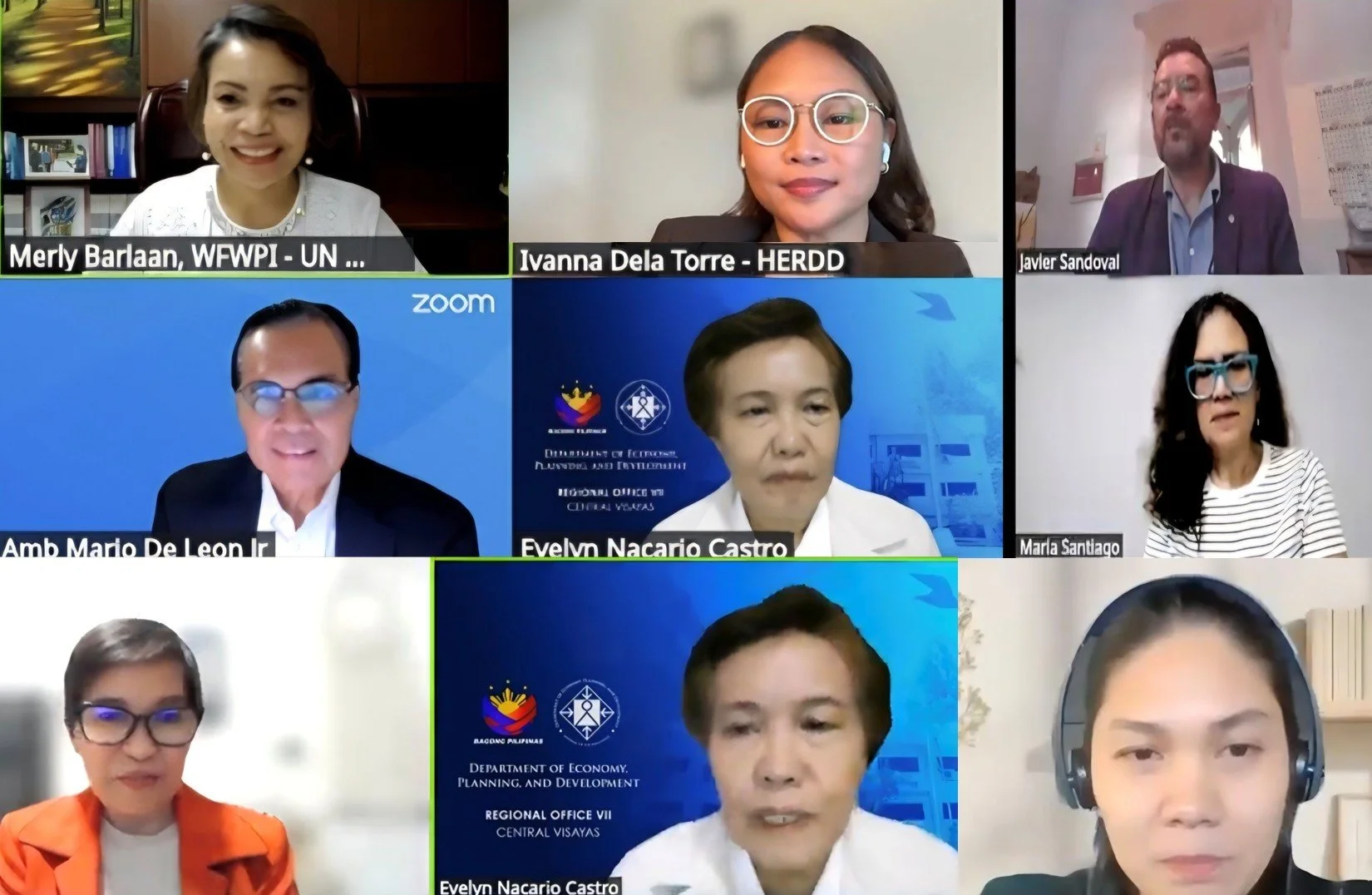
Sustainability leaders say leadership, community-buy-in, and collaboration are elements for a successful SDG on the ground.
Integration and coordination
In the Central Visayas region, which is in the center of the Philippine archipelago, the government has implemented its "decentralized concentrations" of culturally and economically determined development zones.
Assistant Regional Director Evelyn Nacario-Castro of the Department of Economy, Planning, & Development (DEPDev) Central Visayas presented the government roadmap of economic development and integrated 'catch up plan' for the interconnected clusters of towns and cities in the region, aptly called the puso (or hanging rice, a staple food in Cebu and Bohol) regions.
The government taps a coordinative body of community organizations and nonprofit agencies where planning and consultation processes are made.
Castro has extensive experience of sustainable development work at the Ramon Aboitiz Foundation, one of the country's largest nonprofits, as well as being local governance and community engagement consultant.
She emphasized that sustainable development will be realized with everyone's participation. "Government cannot do it alone." Castro observed that environmental advocacy by civil society in Cebu has slowed down in the past 5 to 7 years as huge gaps in implementing sustainability laws have always been a problem.
"We have a plethora of laws, but enforcement is a problem. And the environmental advocacy by civil society has slowed down too, in Cebu where I am at."
Dr. Javier Sandoval, an urban simulation modeler from Mexico, spoke on the integration of human rights, urban planning, and sustainable development in the Human Rights Cartography.
Developed in the College of Urban Jurisprudence International, Sandoval presented a simulated map integrating human rights, programs, and legislation for cities in Mexico and Latin America.
The map is a developmental tool, he said, for the right to cities program of the UN, which by experience became more enriching and impactful when the public actively participated in legislations and programs.
The parallel event wound up with a hopeful excitement of participants for a continued collaboration in the near future.
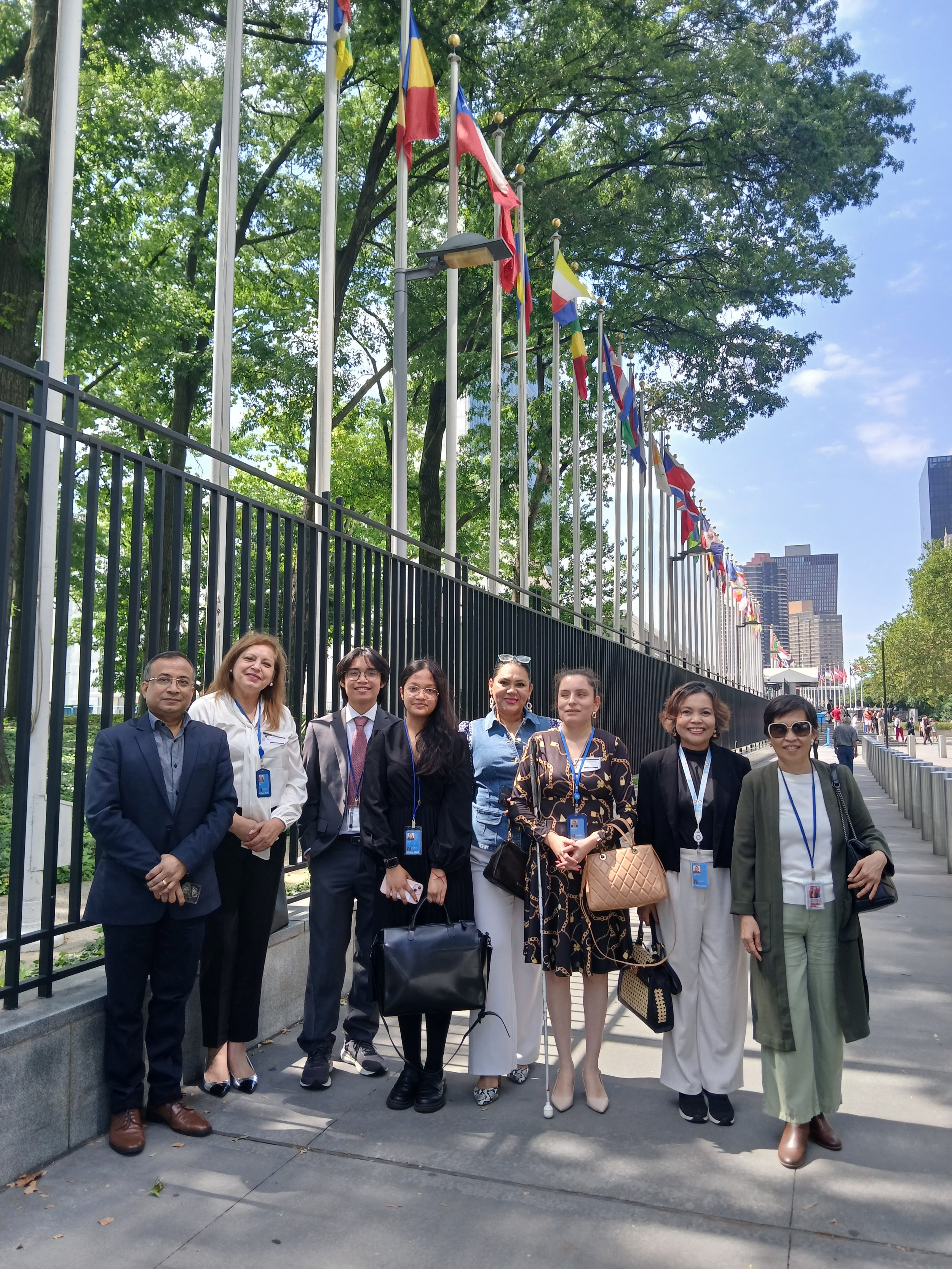
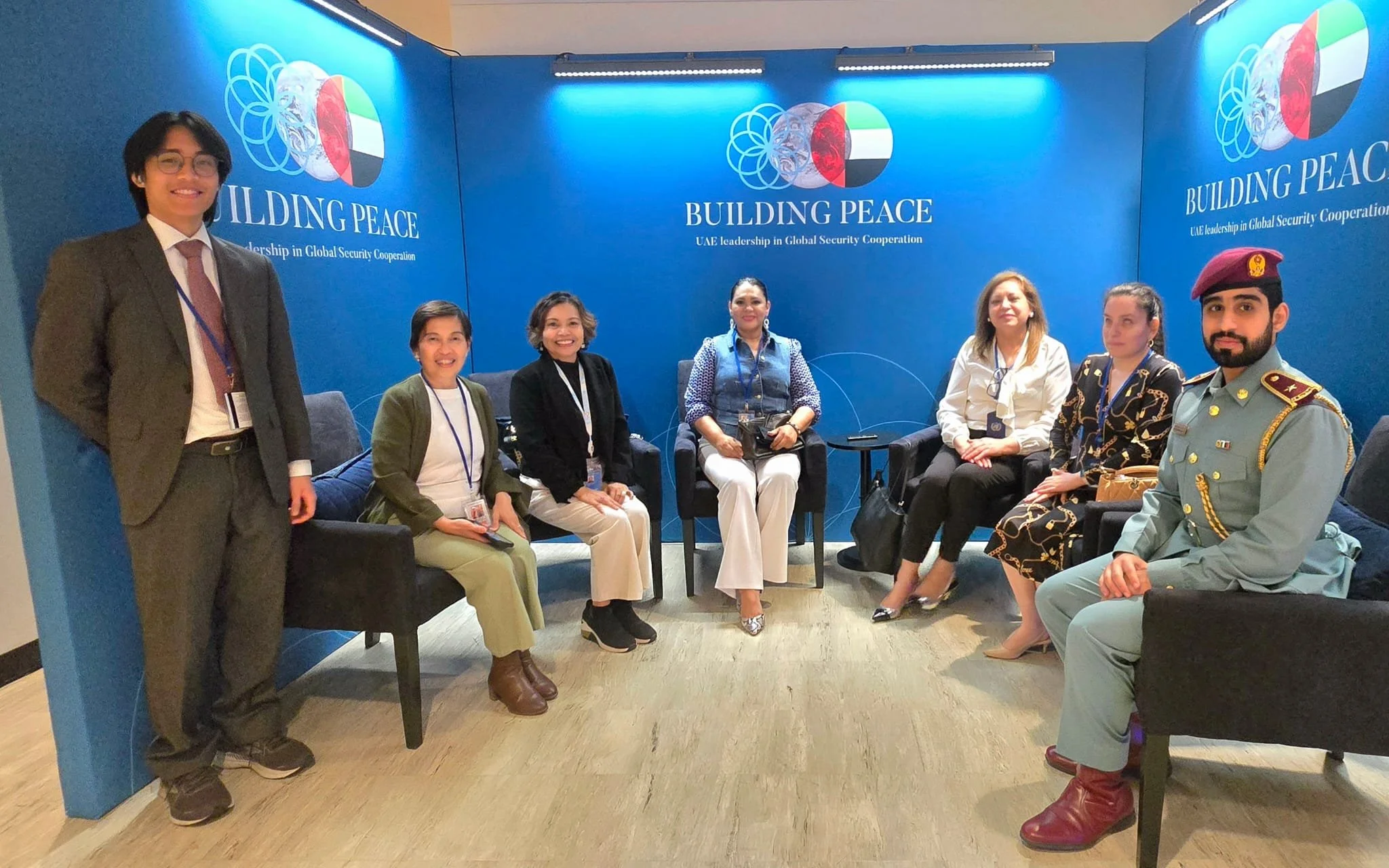
WFWPI UN representatives at the 2026 HLPF in New York: (l-r) Anupam Dutta, Maria Garces, Shinwon Barlaan, Arshia Dutta, Lorena Ramos, Merly Barlaan, and Marivir Montebon.