
Reflections: The Implementation of the Right to Development is a Matter of Leadership
By Dr. Elaine Duval, Clara Buckert, Anais Taffin, and Priscilla Garces
New York – The side event on the Right to Development, at the margins of the 3rd Committee for the 81st session of the UN General Assembly on October 30th, 2026, marked the 40th anniversary of the Declaration on the Right to Development (RTD). It was a great opportunity for insightful learning.
The Permanent Mission of China, the Coordinating Bureau of Non-aligned Movement, and the Office of the High Commissioner on Human Rights organized the event that brought together member states, UN colleagues and human rights experts for a discussion on advancing the right to development in practice.
Absence of a Legal Bind for the International Community
The event gave an overview of where the historic roots of the RTD lay, as well as its current problems and hopes for the future. The greatest challenge is that while the Right to Development is an inalienable human right, there is no legally binding framework enforcing it.
This means countries are not translating this human right into policies and statues, leaving their constituents vulnerable and unable to make use of their rights.
The keynote speakers and panelists agreed that the right to development must be understood not only in economic terms, but also in cultural and social terms.
Not only economic prosperity is important, but the people who hold the RTD. The right has the power to create more secure and just futures due to increased opportunities, economic stability, and overall power that is transferred to the people.
The RTD requires no one to be left behind, as Ms. Bjørg Sandkjær, (Assistant Secretary-General for Policy Coordination, UN DESA) specified, and whose process matters just as much as the outcome through the meaningful intervention of people.
One of the biggest hurdles at the UN for RTD to become an international covenant is that old systems enforcing old cycles of power imbalance and economic dependence continue. All participants seemed to agree that only a legally binding framework and international cooperation will be able to overcome this.
Although the challenges to translate the principles of the RTD into tangible improvements and changes in people's lives, panelist Ms. Juana María Ibáñez Rivas (Chair of the Expert Mechanism on the Right to Development) provided a positive and hopeful assessment of RTD on regional, jurisprudential, and national levels, further highlighting how climate change and sustainable development are a part of this fundamental human right.
Over the course of 40 years, regional formations like the Global Development Initiative or the ASEAN Declaration on the Right to Development and the Right to Peace have been established.
Nonetheless, there seems to be a lack in innovation to further this right without the covenant with most of the work laying on the shoulders of civil society.
Highlighting the discussion was the need for international development cooperation and the greater investment in opportunities that advance human well-being, including disadvantaged populations.
An RTD convention can play a vital role in strengthening institutions, expanding access to essential services, and enabling individuals and families to improve their circumstances.
Implementation as a Matter of Leadership
The call for implementation of the RTD raises the question of leadership. Who bears responsibility for ensuring that international commitments become realities? Governments and international institutions unquestionably have indispensable obligations, but civil society organizations also possess important capacities to educate, advocate, mobilize communities, and encourage accountability.
Within WFWPI, this responsibility finds expression through our efforts to promote women's leadership, foster cooperation and peace, and strengthen the relationships upon which community well-being depends.
As a global NGO committed to peace and development and women’s leadership, WFWPI recognizes that peace cannot be advanced solely through the articulation of noble ideals. It must also be cultivated through practical action that responds to human needs and creates opportunities for meaningful participation.
The distance between aspiration and achievement remains considerable, and WFWPI remains steadfast in its work.
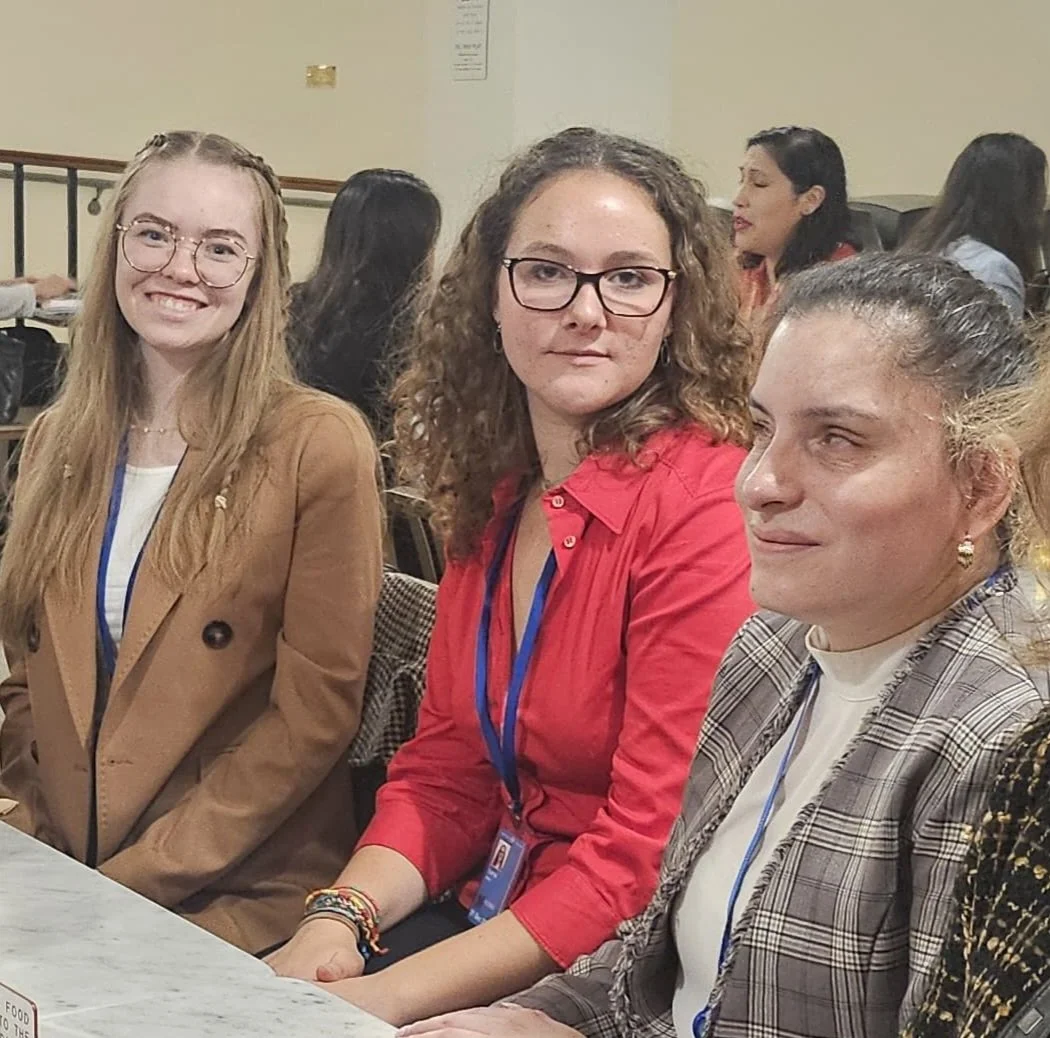
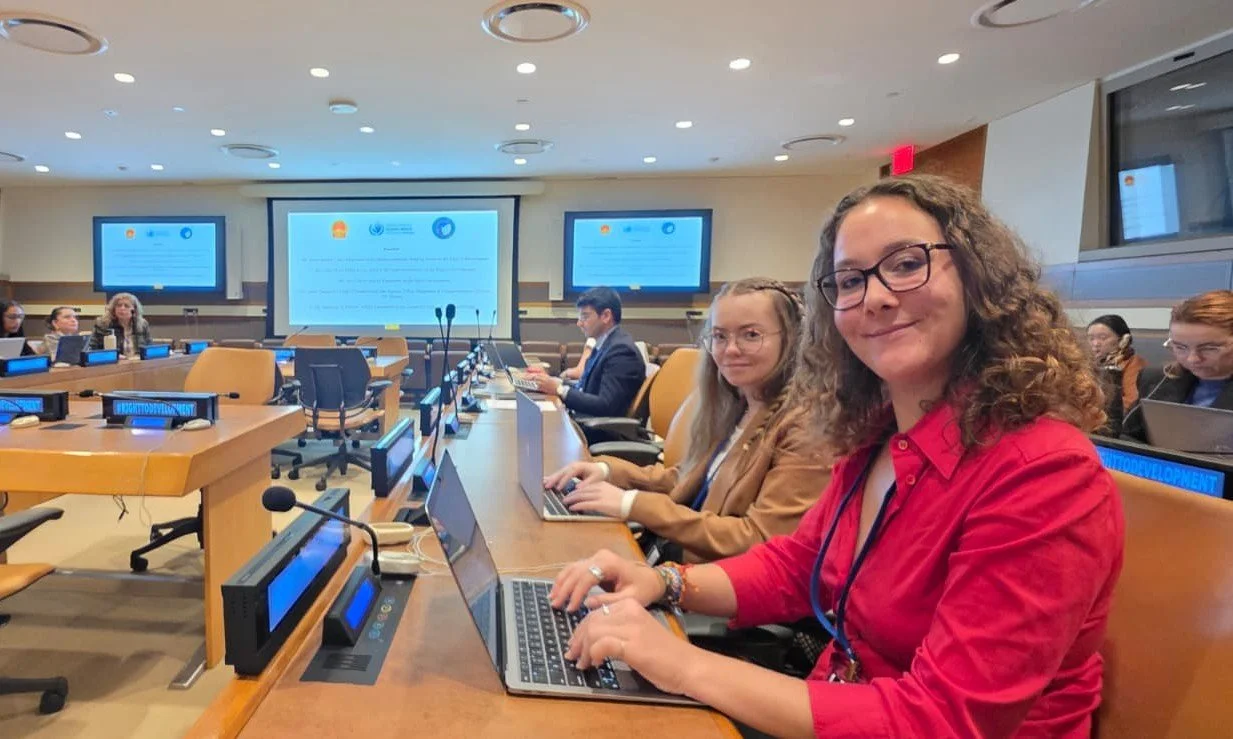
WFWPI UN representatives and interns Anais Taffin and Clara Buckert
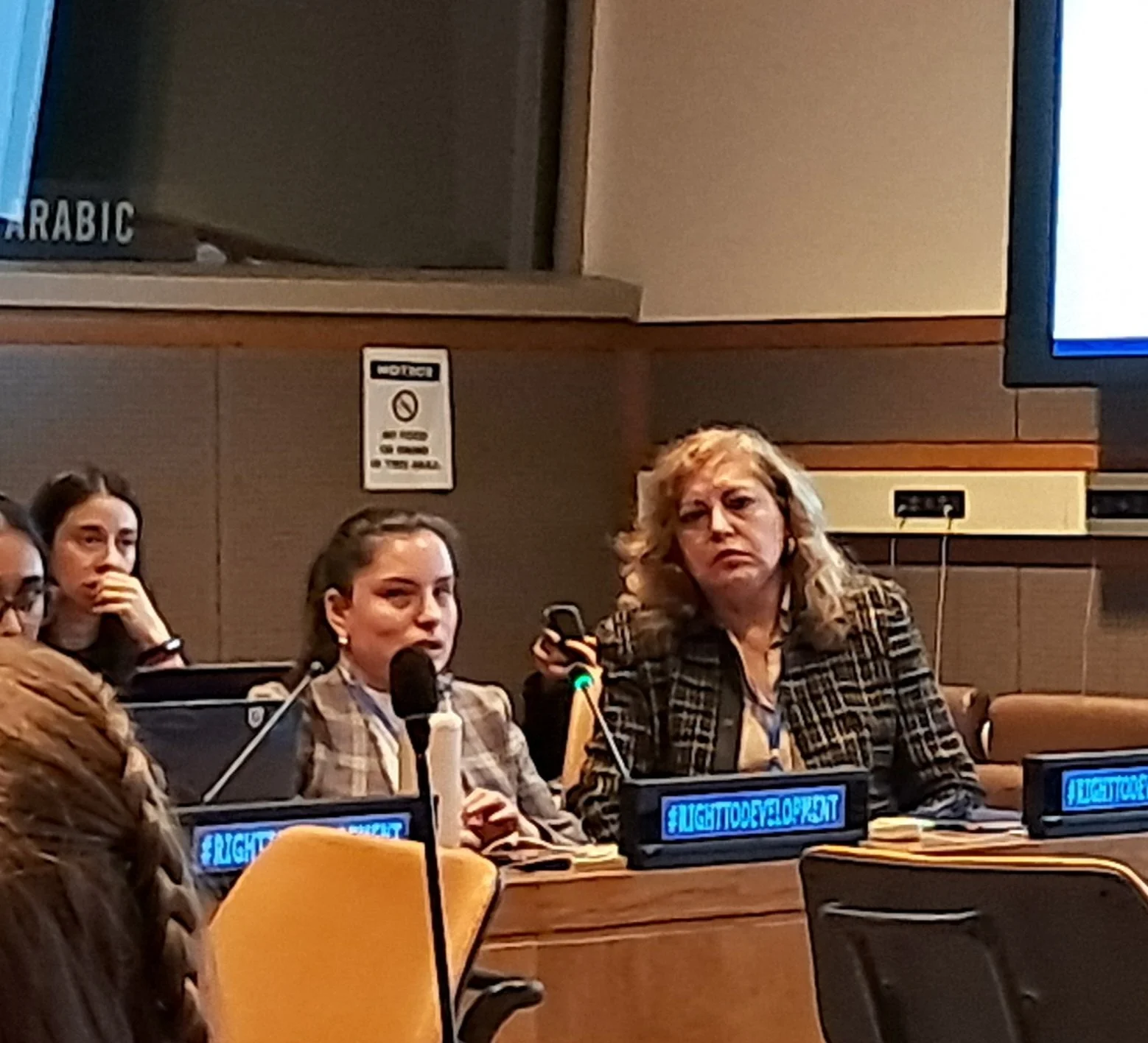
UN representatives Priscilla and Maria Garces